
The same flexo printer can print both 3-ply and 5-ply corrugated boxes — what changes is board thickness and rigidity, not the printing principle. BMC flexo slotter die-cutters accept board from about 1.5–12 mm (2–11 mm on the vacuum-transfer line), which comfortably covers single-wall 3-ply and double-wall 5-ply. So the real decision is about the feeding system and print precision you need, not whether a machine "can do" 5-ply.
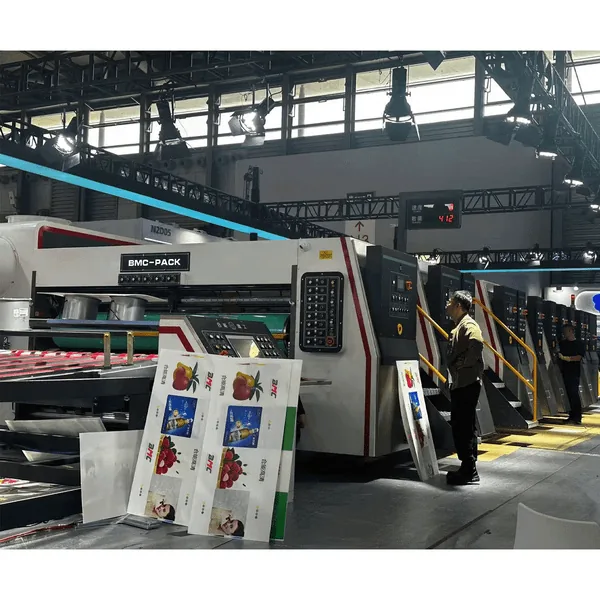
3-ply vs 5-ply: what actually differs
3-ply (single-wall) board is roughly 3 mm thick and less rigid. Its main printing risk is crush: too much print or feed pressure flattens the flutes and dulls the finished box. 5-ply (double-wall) board is around 7 mm, stiffer and heavier. Its challenge is feeding: thick, rigid sheets need a strong, well-timed feeder to enter square without jamming. A good flexo printer handles both by giving you pressure control for thin board and robust feeding for thick board.
Does board ply change the printer you need?
Not the model — the settings. BMC flexo slotter die-cutters are rated for a wide board range, so one machine spans both:
| Machine | Board thickness range | Print / registration precision |
|---|---|---|
| Fully automatic high-speed flexo slotter die-cutter | 1.5–12 mm | Registration ≤±1.5 mm; die-cut ≤±0.4 mm |
| Vacuum-transfer fully automatic servo box line | 2–11 mm | Print precision ±0.1 mm |
Both ranges cover 3-ply and 5-ply. What separates them is feeding technology and print accuracy — which matters most when your graphics are demanding.
Feeding is the deciding factor
For plants running mostly 3-ply with fine print, a servo vacuum-transfer feeder handles thin, sometimes warped board gently and holds tight registration. For plants running heavy 5-ply, a strong lead-edge feeder drives rigid sheets in square at speed. If your mix spans both, choose the machine whose feeder is happiest with your hardest board — usually the thickest, most warped stock you run.
Recommendation
- Mostly 3-ply, high-quality print → prioritise a servo vacuum-transfer line for tight registration and gentle feeding.
- Mostly 5-ply, heavy shippers → prioritise robust lead-edge feeding and confirmed working speed on thick board.
- Mixed 3-ply and 5-ply → one wide-range flexo slotter die-cutter covers both; spec the feeder for your thickest board.
Compare configurations across the flexo printer range, including the fully automatic high-speed flexo slotter die-cutter. For a broader specification walk-through, see our carton printing machine buyer guide.
Summary
3-ply versus 5-ply is a board-handling question, not a "can it print" question. BMC flexo printers cover both thickness ranges; choose the model by the feeder your hardest board needs and the print precision your graphics demand. Send us your board grades and box sizes and we'll match the machine.