
Corrugated cardboard began not as packaging but as a hat liner. The fluted paper at the heart of every corrugated box was first patented in England in 1856; it took another two decades for inventors to line it on both sides and turn it into the strong, light board that now ships most of the world's goods. Here's how corrugated cardboard evolved — and why, over 160 years later, it still dominates packaging.
Origins: fluted paper, 1856
In 1856, two Englishmen patented fluted (corrugated) paper — but as a sweatband liner for the tall hats of the day, not for packaging. The idea of using those flutes for strength and cushioning came later. In 1871, Albert Jones of New York patented single-sided corrugated material to wrap fragile goods such as bottles and glass chimneys. It protected well, but with only one liner it was floppy.
The box takes shape: 1874 onward
The breakthrough came in 1874, when a liner sheet was added to both faces of the fluted medium, creating the rigid, self-supporting board we'd recognise today. With a flat, printable surface on each side and a cushioning flute between, corrugated board could finally be made into structural boxes rather than just wrapping.
Replacing the wooden crate
Through the 1890s and early 1900s, corrugated shipping boxes began displacing wooden crates and boxes. They were lighter, cheaper, easier to store flat and print on, and kinder to the goods inside. As rail and later road freight grew, so did demand for a standardised, mass-producible shipping container — and corrugated fit perfectly.
Flutes and modern manufacturing
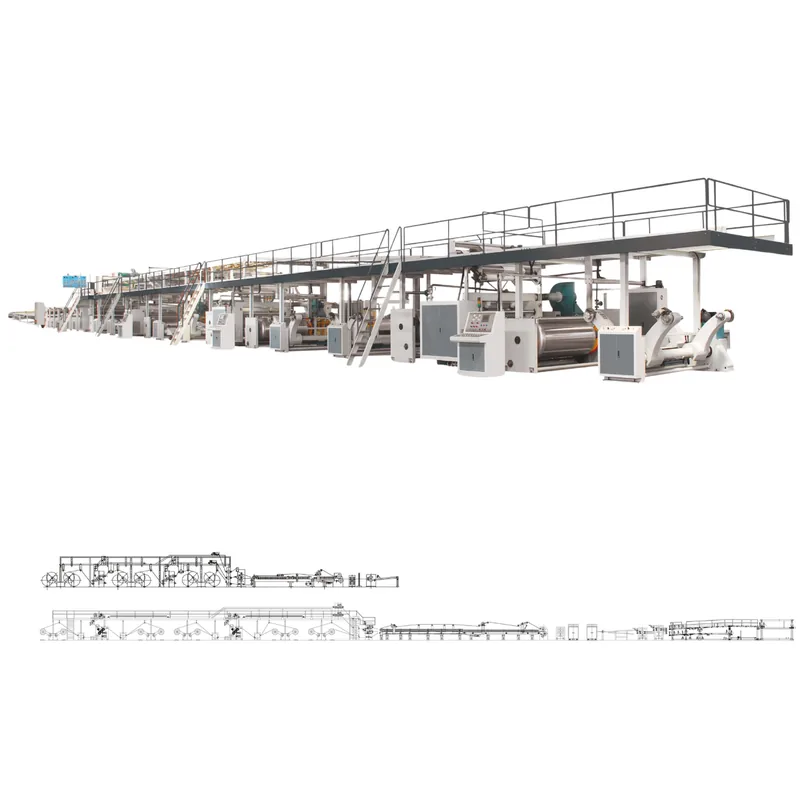
Corrugated is classified by flute profile — A, B, C, E and F — which differ in flute height and number per metre, trading cushioning against printability and stacking strength. Double-wall (5-ply) and triple-wall (7-ply) constructions combine flutes for heavier duty. Today these boards are produced on continuous corrugated cardboard production lines that form, glue and bond multiple plies at speed, then feed printing and converting equipment such as flexo printers.
Why it still dominates
More than 160 years on, corrugated remains the default shipping material because it hits a rare balance: strong yet light, cheap to make, easy to print and — importantly today — highly recyclable and made largely from renewable fibre. The e-commerce boom only deepened its lead, since almost every parcel needs exactly what corrugated offers.
Summary
From an 1856 hat-liner patent to the lined box of 1874 and today's high-speed production lines, corrugated cardboard evolved into the world's most-used shipping material by being strong, light, printable and recyclable. The machines have transformed; the fluted principle at its core has not.