Rotary die-cutting saves more when you run long, repeat jobs at high volume; flatbed die-cutting saves more on short-to-medium runs, thick board and jobs where crease and cut quality matter most. The two methods aren't really competitors — they win in different situations. Rotary cuts inline on a flexo line at high speed with lower labour; flatbed applies even, full-sheet pressure for crisp results. This guide compares them on the factors that actually move cost.
How the two methods work
Rotary die-cutting wraps a curved die around a cylinder and cuts continuously as the board passes through — typically as the die-cut unit of a flexo printer slotter line, so printing, slotting and cutting happen in one pass. Flatbed die-cutting presses a flat die down onto a stationary sheet with high tonnage, cutting the whole sheet at once. Rotary is about continuous speed; flatbed is about even pressure and precision on each sheet.
The factors that decide cost
| Factor | Rotary (inline) | Flatbed |
|---|---|---|
| Speed | High — inline at flexo line speed | Moderate — per-sheet stroke |
| Die-cutting accuracy | ≤±0.4–0.5 mm (BMC flexo lines) | Even full-sheet pressure, crisp creases |
| Working pressure | Roller nip | Up to 300 tons (BMC NDAD) |
| Die cost | Rotary dies cost more per job | Flat dies are cheaper to make |
| Labour | Lower — runs inline, fewer touchpoints | Higher — separate feeding/stacking |
| Best for | Long, repeat, high-volume runs | Short-to-medium runs, thick board, detail |
Which one saves more — by situation
Choose rotary when you run high volumes of the same box, value speed and want fewer operators; the inline die-cut on a flexo line keeps unit labour low. Choose flatbed when you run varied short-to-medium jobs, cut heavier board, or need the crisp creases and fine detail that even full-sheet pressure gives — and where cheaper flat dies suit frequent job changes. Many plants report meaningful savings either way; the gain depends on your job mix, so the honest answer is to match the method to how you actually run.
You may want both
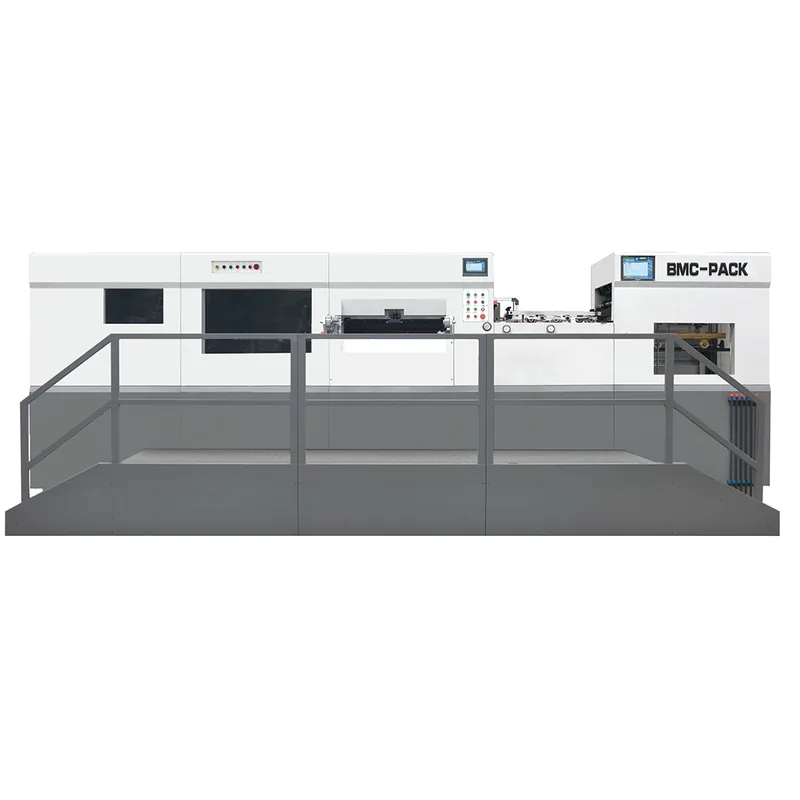
Larger plants often run rotary inline for long print-and-cut jobs and keep a flatbed press for premium, short-run or thick-board work. See BMC's die cutting and creasing machine range for flatbed options and the fully automatic high-speed flexo slotter die-cutter for inline rotary die-cutting. For sizing a flatbed press, see our flatbed die-cutting for duplex paper buyer guide.
Summary
Rotary saves more on long, high-volume, repeat runs through speed and low labour; flatbed saves more on short-to-medium, thick-board or high-detail work through cheaper dies and even pressure. Decide by your volume and box mix, not by a single headline figure. Tell our engineers your run lengths and box types and we'll recommend the right approach.