
Upgrading from a semi-automatic to a servo folder gluer pays off in five ways: much higher speed, more consistent folding accuracy, lower labour per box, steadier quality on long runs, and cleaner integration with an automated line. A semi-auto machine suits low volume and varied work; once your orders grow and repeat, servo automation removes the manual bottleneck. Here's what changes — with real BMC specifications.
1. Higher speed and throughput
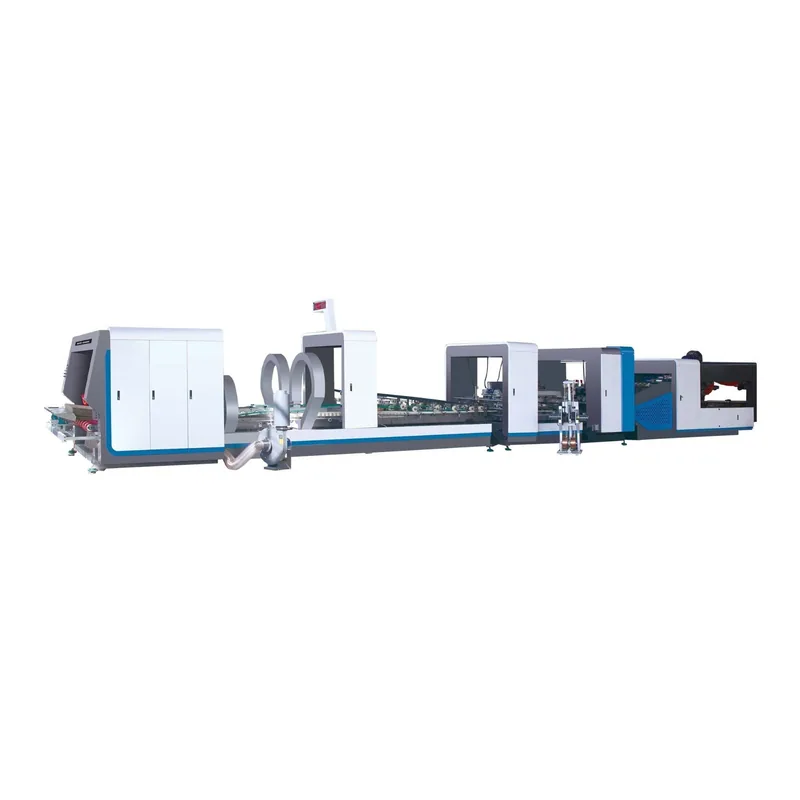
This is the headline gain. BMC's high-speed servo folder gluer stitcher runs at a design speed of 220 m/min (180 m/min working) with stitching up to 1,200 stitches/min — far beyond what a manual, semi-automatic pressure folder gluer sustains. On long, repeat orders that difference dominates your output.
2. Consistent folding accuracy
Servo synchronisation keeps folding and gluing aligned run after run, so the manufacturer's joint stays square without constant manual correction. That consistency is what protects box quality at speed.
3. Lower labour per box
A semi-auto machine needs hands-on feeding and handling; a servo automatic machine runs the fold-glue (or fold-stitch) cycle continuously with far fewer touchpoints, lowering labour cost per box as volume rises.
4. Steadier quality on long runs
Stored job settings and servo control mean the machine repeats a known-good set-up rather than drifting, reducing rejects across a shift.
5. Line integration
A servo machine slots into an automated flow — fed from printing and finishing — far more cleanly than a manual station, keeping the whole line moving.
When semi-auto is still right
For low volumes, specialty boxes or a very wide job mix, a semi-automatic pressure folder gluer (such as BMC's NDSA-1800FG, handling paper up to 1800 × 1100 mm) remains a sensible, lower-cost choice. The upgrade case is strongest when your runs are long, repeat and speed-limited.
Compare options in the folder gluer machine range, see the high-speed automatic folder gluer and stitcher, and read our folder gluer stitcher buyer guide to size the move.
Summary
Move from semi-auto to servo when volume and repeat work make manual folding the bottleneck: you gain speed, accuracy, lower labour, consistency and integration. Keep semi-auto for low volume and specialty jobs. Tell our engineers your box sizes and volumes and we'll advise whether the upgrade pays off for you.