Invest in a double facer line when your volume is consistently high, board flatness and moisture consistency start limiting your printing and converting, or you're bonding multi-wall board that single-facing can't produce cleanly. A double facer bonds the outer liner to the single-faced web under controlled heat, tension and pressure — the step that turns a fluted web into flat, strong, print-ready board. Below are the signs it's time, and what BMC's double facer brings.
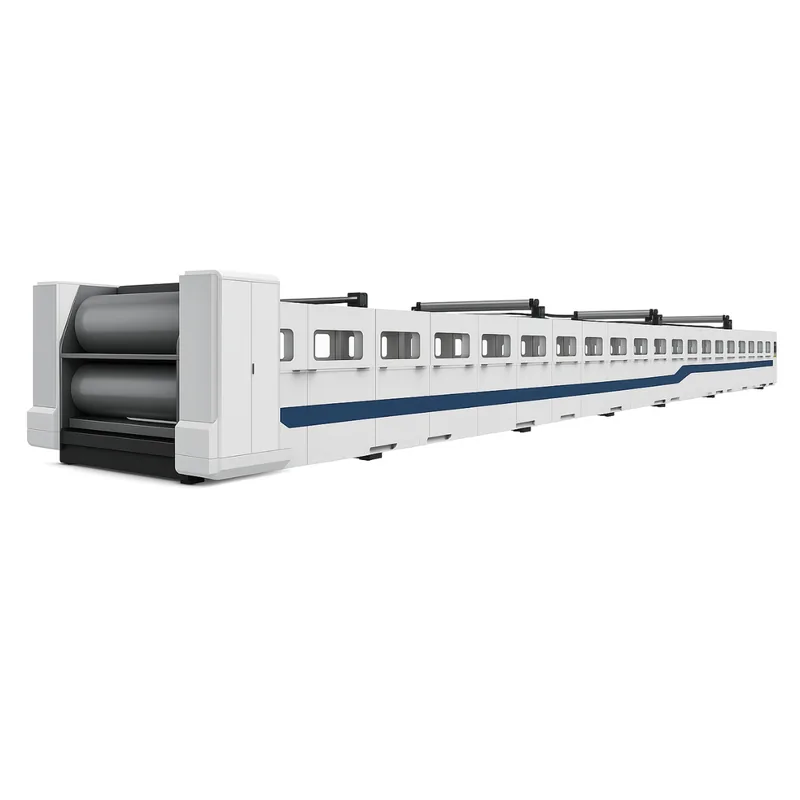
What a double facer does
After the single facer forms and glues the fluted medium to one liner, the double facer bonds the second (outer) liner and passes the board across heated plates under even pressure, setting the glue and flattening the board. The result is dimensionally stable, flat board — the foundation for clean printing, accurate die-cutting and consistent folding downstream.
Signs you're ready to invest
- Sustained high volume — you're running large, steady orders where a continuous line beats batch methods.
- Flatness and warp problems — board warp or inconsistent moisture is causing print misregister and converting waste.
- Multi-wall board demand — you need 5-ply or 7-ply constructions that require proper double-facing.
- Downstream bottleneck — your printers, die-cutters and folder-gluers are waiting on board quality or supply.
Many plants report that stable, flat board sharply reduces downstream rejects; the exact volume threshold that justifies the investment depends on your order mix and costs, so model it on your own numbers.
What BMC's double facer brings
The BMC double facer (model NDDF-HE) is built for stable bonding: 12 hot plates, each 800 mm wide, with ground and hard chrome-plated surfaces for even heat transfer and long life; a frequency converter that synchronises the glue applicator with the hot-plate section; and electrically controlled hydraulic lifting via a 4 kW hydraulic station, with manually adjustable steam piping to suit different board specs. Within a full line, it pairs with the advanced 3/5/7-ply system that runs at working speeds up to 180 m/min.
See the double facer model NDDF-HE and the complete corrugated cardboard production line range. For the wider business case, read how corrugated machines improve quality, output and cost.
Summary
A double facer line pays off when volume is high and board flatness, moisture consistency or multi-wall capability are limiting your output — it's the step that makes board print- and convert-ready. BMC's NDDF-HE delivers stable, even bonding within a full production line. Tell our engineers your volumes and board specs and we'll advise whether it's the right next investment.