
Choose a cassette single facer when you change flute profiles often and want fast roller changeovers and the highest speeds; choose a fingerless single facer when you want stable, mark-free web guiding at a lower entry point. Both form the fluted medium and bond it to one liner — they differ mainly in how the corrugating rollers are swapped and how the web is guided. Here's the comparison, with real BMC specifications.
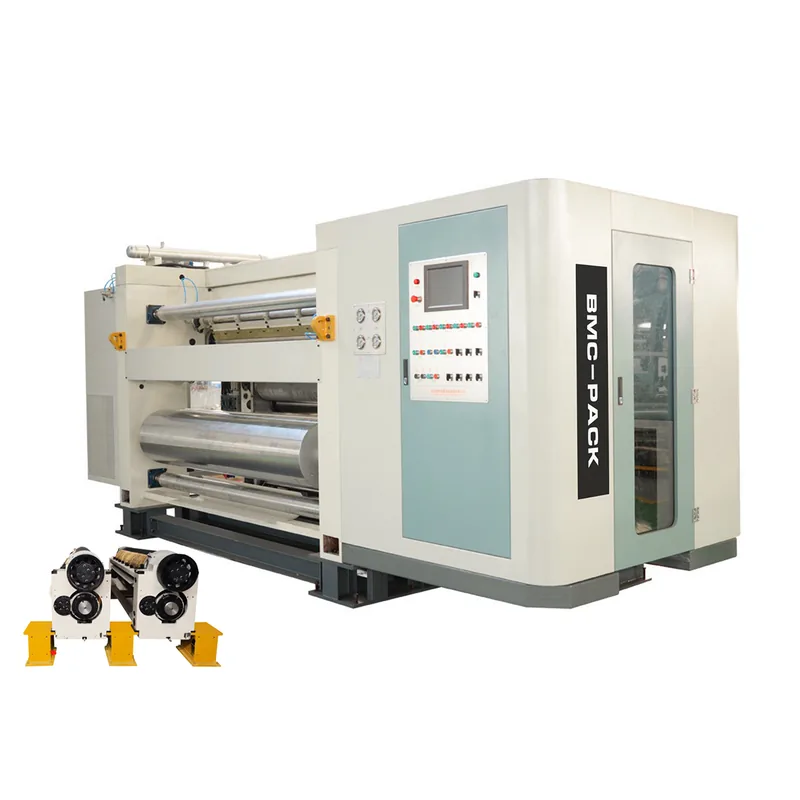
The core difference
A cassette single facer houses the corrugating rollers in a removable cassette, so you can swap the whole roller set to change flute profile quickly — ideal for plants that switch between A, B, C, E flutes often. A fingerless single facer replaces the traditional guide "fingers" that hold the medium to the roller with a vacuum system, so nothing touches the flute tips — giving cleaner, mark-free forming and stable guiding at speed.
Real BMC specifications
| Specification | Cassette (NDSF-405 / 420) | Fingerless (NDSF-320S / 360S / 380S) |
|---|---|---|
| Design speed | 250 / 300 m/min | 150 / 180 / 200 m/min |
| Working speed | 200 / 250 m/min | — |
| Effective width | 2000–3000 mm | 1400–2200 mm |
| Corrugating roller dia. | φ405 / φ420 mm | φ320 / φ360 / φ380 mm |
| Roller / flute change | ~20 min (cassette) | — |
| Web guiding | Standard | Vacuum adsorption, fingerless |
| Heating | Steam | Steam |
Which suits your plant?
Cassette wins where flute-change frequency and top speed matter — wider webs, higher throughput and quick profile swaps via the cassette. Fingerless wins where forming quality and stable guiding matter, or as a strong-value single facer for narrower webs; the vacuum guide avoids finger marks on the flute tips and holds the web steady at speed. Plants running many flute changes typically favour cassette; those prioritising forming quality and value favour fingerless.
See the cassette single facer NDSF-405/420 and the fingerless single facer NDSF-320S/360S/380S, both part of the corrugated cardboard production line.
Summary
Cassette single facers favour fast flute changes and higher speed on wider webs; fingerless single facers favour clean, mark-free forming and stable vacuum guiding. Match the choice to how often you change flutes and how much you value forming quality versus speed. Our engineers can recommend the right single facer for your line.