
A lead-edge feeder grips the front of each sheet and drives it in one at a time for higher speed and tighter registration; a rear-edge (chain) feeder pushes the sheet from behind and is simpler and cheaper but slower. For precise, high-volume carton printing the lead-edge feeder is the modern standard; the rear-edge feeder still makes sense for budget-conscious, lower-speed work. Here's how they compare, with real BMC flexo numbers.
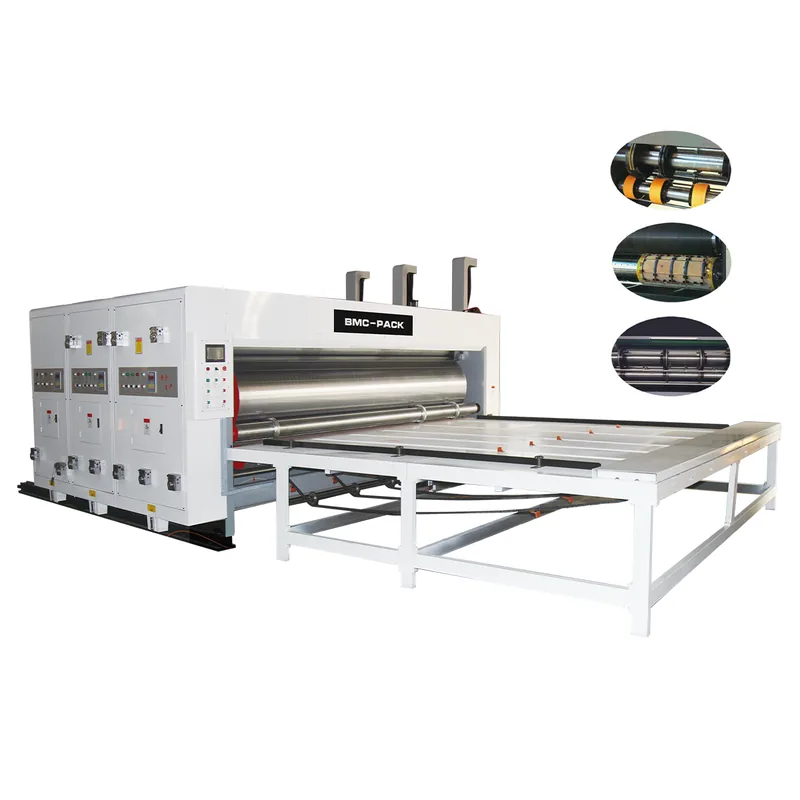
How each feeder works
A lead-edge feeder picks each sheet by its front edge (usually with vacuum and servo timing) and feeds it individually, so sheets enter square and consistently — the key to tight registration at speed. A rear-edge / chain feeder uses a chain with lugs to push the sheet from the trailing edge; it's mechanically simple and robust but feeds less precisely and more slowly, and is more sensitive to board variation.
Real BMC specifications
| Specification | Lead-edge flexo slotter die-cutter | Rear-edge / chain feed (NDCF) |
|---|---|---|
| Design speed | up to 300 pcs/min | 60–80 pcs/min |
| Registration precision | ≤±1.5 mm | ≤±1.5 mm |
| Die-cutting accuracy | ≤±0.4 mm | ≤±0.5 mm |
| Board thickness | 1.5–12 mm | 2–12 mm |
| Best for | High-volume, precise printing | Budget, lower-speed runs |
The headline gap is speed: BMC lead-edge machines are rated several times faster than chain-feed models, which is why high-volume plants favour lead-edge feeding.
Which should you choose?
Lead-edge for medium-to-large factories that need speed and clean, repeatable registration — especially for branded, multi-colour cartons. Pair it with servo vacuum transfer for the tightest results. Rear-edge / chain feed for smaller operations, simpler jobs or tighter budgets where top speed isn't the priority. Match the feeder to your volume and print-quality demands rather than to a single spec.
See the chain-feed flexo slotter die-cutter and the full flexo printer range. For board-thickness considerations, read our 3-ply vs 5-ply flexo printer guide.
Summary
Lead-edge feeding delivers the speed and registration high-volume carton printing needs; rear-edge (chain) feeding is a simpler, cheaper option for lower-speed work. Both hold similar registration tolerance, but lead-edge is far faster. Tell our engineers your volumes and print requirements and we'll recommend the right feeder.